
Home / Research Blog
■ Research Blog
The Research Bench
Peptide research, breakthroughs, study summaries, and lab-handling guides from Cerberus Research Labs. New articles twice a week. Research use only — educational context, never dosing or medical advice.
Reconstitution, Done Right: A Lab-Handling Walkthrough
A lyophilized peptide is stable, forgiving, and easy to ship. The moment solvent hits the cake, all three stop being true. Here is…
TB-500 and Thymosin Beta-4: What the Actin-Repair Research Actually Studies
TB-500 and thymosin beta-4 are used as synonyms almost everywhere online, and that is the single most consequential error in this …
How Snake Venom Became a Blood-Pressure Drug
One of the most-prescribed blood-pressure drug classes in the world started as a way for a pit viper to drop its prey's blood pres…
GHK-Cu: What the Copper-Peptide Research Actually Studies
They call it the "Pretty Boy Peptide," but the nickname is about fifty years younger than the molecule. GHK was isolated…
Epitalon and the Longevity Peptides: What the Research Actually Studies
Epitalon is a four-amino-acid peptide with an outsized reputation. Understanding where it came from — a Soviet-era program that gr…

NAD+ and Cellular-Energy Research: What the Science Actually Studies
NAD+ sits at the center of two very different jobs in the cell: it is the electron carrier that makes energy metabolism possible, …
How to Read a Peptide Certificate of Analysis (COA)
A Certificate of Analysis is the single most useful document a peptide supplier can hand you — and the easiest one to fake convinc…
Peptide Stability and the Cold Chain: A Lab-Handling Overview
A peptide that is stable for a year lyophilized in a freezer can lose meaningful integrity within days once reconstituted and left…
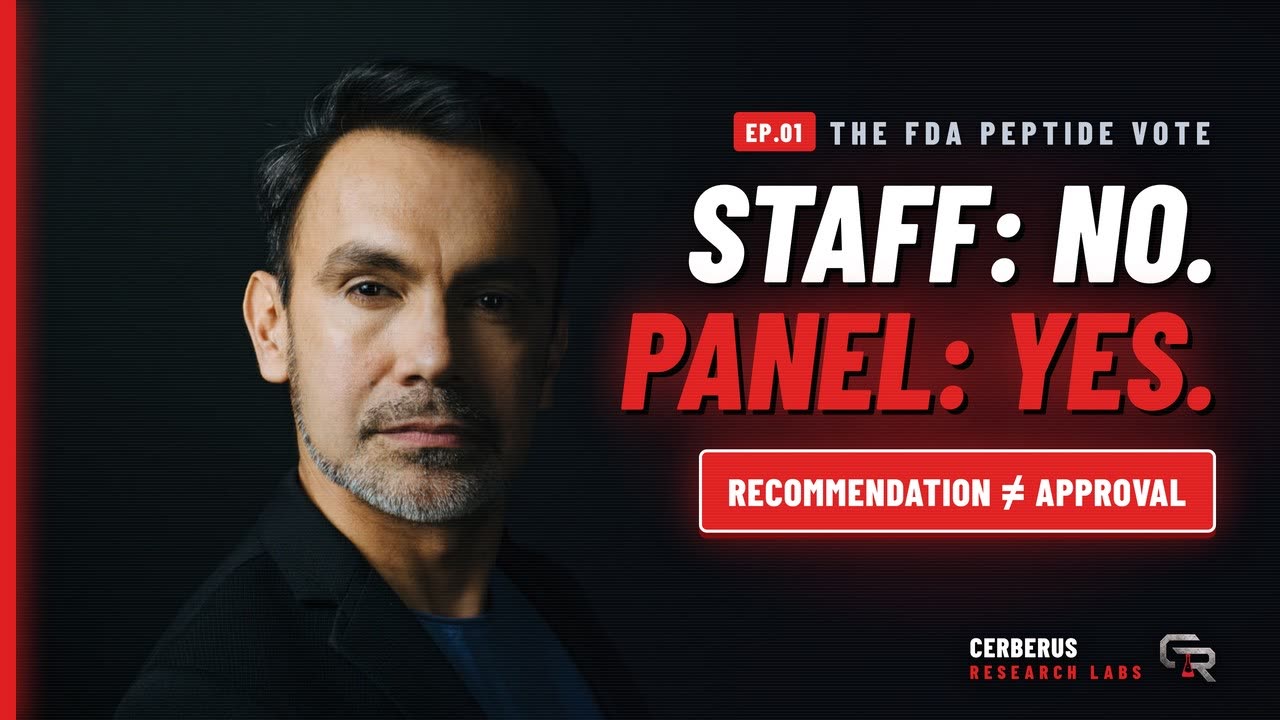
The FDA Peptide Vote: Staff Said No, the Panel Said Yes
An FDA advisory committee just voted to recommend two research peptides for the compounding list — against its own staff's advice.…

Cagrilintide and the Amylin Comeback
Amylin spent years as the quieter partner to insulin in metabolic research. Cagrilintide, a long-acting amylin-receptor agonist, i…

BPC-157: What the Tissue-Repair Research Actually Studies
Few research peptides carry as much online mythology as BPC-157. Strip that away and what remains is a body of preclinical work on…
GLP-1 Peptides in 2026: The Research Landscape
GLP-1 research has moved fast: a single-pathway hormone tool became a dual agonist, then a triple agonist, in a few short years. H…
Retatrutide and the Triple-Agonist Era
The metabolic research field moved from single GLP-1 signaling to dual agonists to triple agonists in just a few years. Retatrutid…