
Watch on our channel — new research breakdowns regularly. Research Use Only.
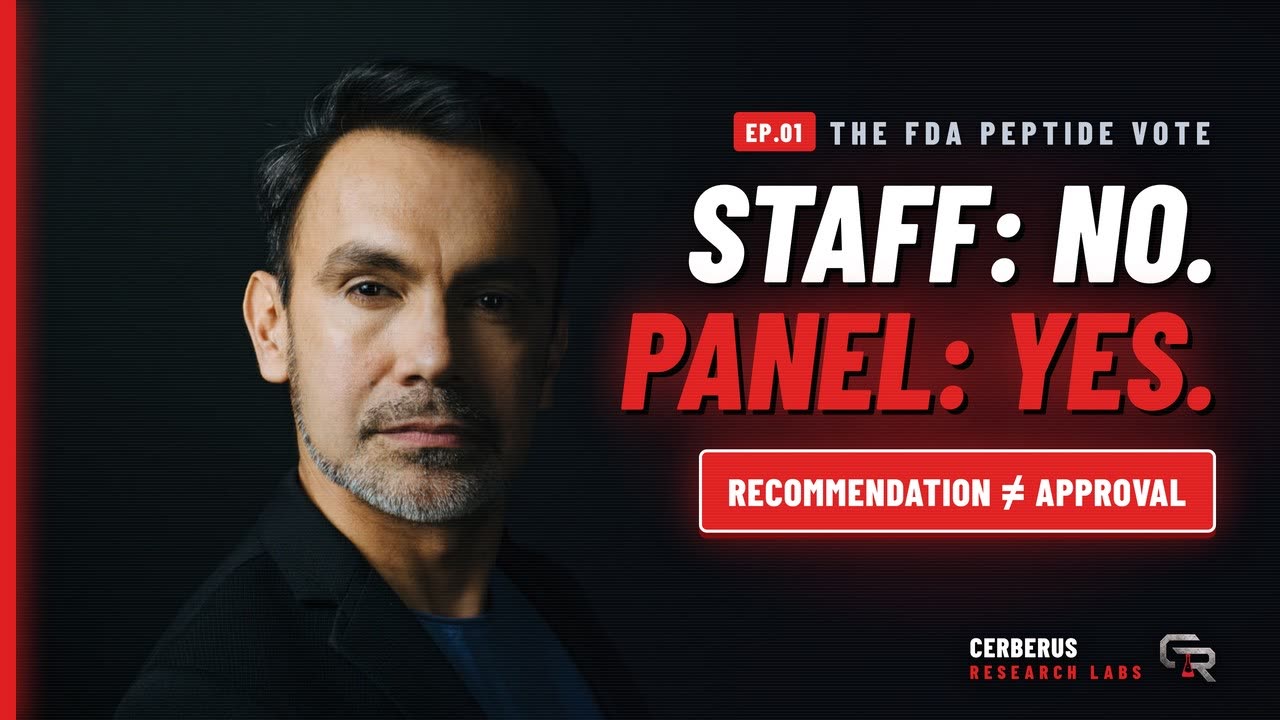
On July 23–24, 2026, the FDA's Pharmacy Compounding Advisory Committee (PCAC) did something unusual: it voted 8–6–1 to recommend two peptides — BPC-157 and KPV — for the 503A compounding "bulks" list, over the objection of the FDA's own review staff. Our first video breaks down exactly what happened and why the framing in most headlines is misleading. This page is the short written companion.
What the committee actually voted on
PCAC is an advisory committee. Its job is to review candidate substances and advise the FDA on whether they belong on the section 503A bulk drug substances list — the list of ingredients that state-licensed pharmacies may use in traditional compounding. A "yes" from PCAC is a recommendation, not a rule, not an approval, and not a marketing authorization.
Recommendation ≠ approval
This is the single most important distinction, and the one most coverage blurs. The committee's vote does not place BPC-157 or KPV on the list. It does not mean either compound is FDA-approved for any use. It moves the question to the FDA, which can accept, reject, or defer the recommendation, and any outcome would still sit inside the compounding framework — a different world from a full new-drug approval.
Why the staff said no
FDA review staff had recommended against listing, citing the usual bar: the strength of the available characterization and safety data relative to what the statute requires. The committee weighed the same record and reached a different conclusion — hence the split 8–6–1 tally rather than a lopsided vote. A divided advisory vote over a staff "no" is exactly the kind of signal worth reading carefully rather than as a green light.
Why it matters for research context
For the research community, the value here is transparency: a public federal committee openly debating the identity, purity, and evidence standards for specific peptides. That is the same standard we hold ourselves to — identity and HPLC purity documented per lot. The regulatory conversation and the documentation conversation are the same conversation, and days like this one are why they're worth following.
The bottom line: an advisory committee recommended, against staff advice, that two peptides be considered for the compounding list. A recommendation is a step in a process, not the end of one. Watch the full breakdown above for the timeline, the players, and what to watch next.