
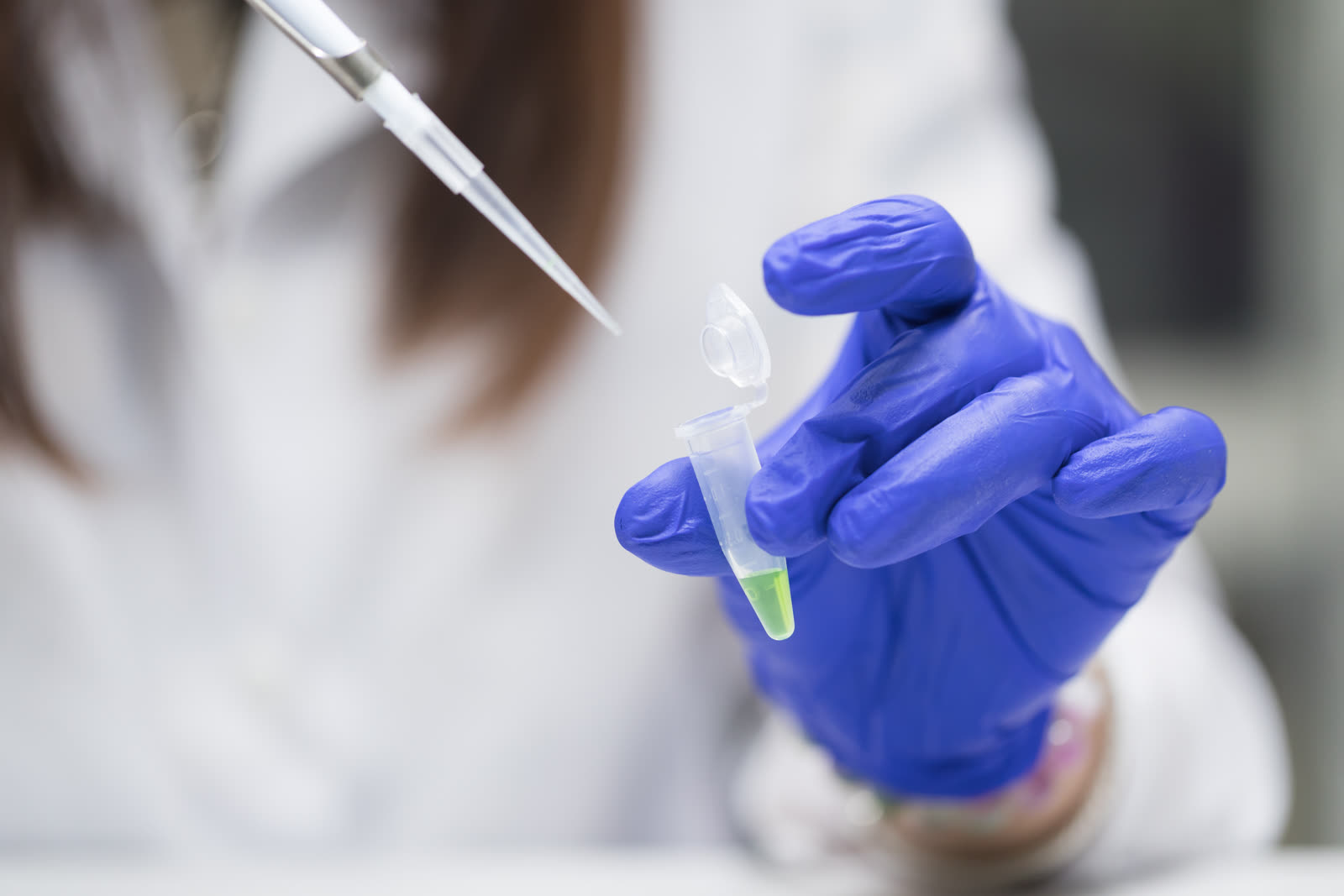
Few areas of peptide research have moved as quickly as GLP-1 signaling. What began as study of a single gut hormone pathway has, within a few years, expanded into a family of research peptides that each probe a different combination of receptors. This is an educational roundup of where that research landscape stands in 2026 — not a comparison of effects, a dosing guide, or medical advice. Every compound named here is supplied strictly for research use only, not for human or veterinary use.
The common thread: GLP-1 signaling
GLP-1 (glucagon-like peptide-1) is an incretin hormone studied for its role in glucose regulation, gastric emptying, and satiety signaling. It is the anchor pathway for the entire research class — every peptide discussed below either targets GLP-1 alone or pairs it with additional receptor activity.
Three research peptides, three designs
Semaglutide — the single-pathway reference
Semaglutide is the most extensively studied GLP-1 receptor agonist and functions as the field's baseline research tool. Its long-acting profile makes it useful in models designed to isolate GLP-1 receptor activity from other signaling inputs. See the semaglutide research page for lot documentation.
Tirzepatide — adding the GIP axis
Tirzepatide engages both the GLP-1 and GIP (glucose-dependent insulinotropic polypeptide) receptors, making it the field's primary "dual agonist" research tool. Researchers use it to study how GIP signaling modulates or amplifies GLP-1-driven effects rather than acting alone. Details are on the tirzepatide research page.
Retatrutide — the triple-agonist frontier
Retatrutide extends the design to a third receptor, glucagon, alongside GLP-1 and GIP. We covered the mechanism in depth in Retatrutide and the Triple-Agonist Era; the short version is that it lets a single molecule hold the ratio of three signaling pathways fixed for study as a system, rather than dosing three compounds and untangling crosstalk after the fact. Lot data is on the retatrutide research page.
Combination research: cagrilintide pairings
Beyond the core GLP-1/GIP/glucagon lineage, a parallel line of research pairs GLP-1-pathway peptides with cagrilintide, an amylin-analog research peptide. These combinations — such as cagrilintide plus semaglutide, or cagrilintide plus retatrutide — let researchers study amylin and incretin signaling side by side rather than in isolation. This is its own research question distinct from receptor-count alone, and worth a dedicated look in a future article.
Why the field keeps adding receptors
Reading the semaglutide-to-tirzepatide-to-retatrutide progression as a research narrative, each step adds a signaling axis that models can study in combination. That is the throughline across 2026's most-cited GLP-1-class research: the interesting question has shifted from "does GLP-1 signaling matter" to "how do these pathways interact when studied together."
The GLP-1 research class did not get more complicated by accident — each added receptor answers a specific question about pathway interaction that single-target tools could not.
Handling these peptides in the lab
All three are supplied lyophilized and require reconstitution before use in a research setting. Our free reconstitution calculator handles the concentration and draw-volume math from vial mass and diluent volume, and every lot ships with documentation in our COA library.
The honest read
GLP-1 research in 2026 is a genuinely fast-moving field, and the peptides above represent three distinct points on the same design curve rather than a strict progression of "better." Each is offered strictly for laboratory research use, and nothing in this roundup should be read as a recommendation for human or veterinary use, dosing guidance, or a claim of therapeutic effect. Consult primary literature and qualified professionals for any research design.